

Preschool dressing practice works best with familiar clothes and time to try. Choose an outfit your child can partly manage, break the process into small steps and offer help where needed. Buying a more complicated outfit does not make the practice more useful.
In September, a new routine can make ordinary tasks feel hurried. A calm practice session on an afternoon or weekend lets you discover which part is difficult before a drop-off deadline turns it into a struggle.
Notice the difficult step
Watch without immediately taking over. Is your child finding the front of the top, getting an arm through a sleeve or pulling trousers into place? Those are different tasks. Practise the one that is frustrating rather than repeating the entire routine every time.
A simple example is laying the top face down consistently, showing where the opening is, and letting your child attempt that first step. Use the same words each time. Stop if the activity becomes upsetting; independence is not a timed test.
Check the fit too. A garment can be difficult because it is too small, twisted or caught on another layer. Do not assume every struggle is a skill the child must learn to overcome.
Choose clothes for the preschool day
Ask the setting about outdoor clothing, indoor shoes and changes for messy activities. Include bathroom access in the outfit decision. An attractive fastening that requires adult help may create a different routine from an easy pull-on garment.
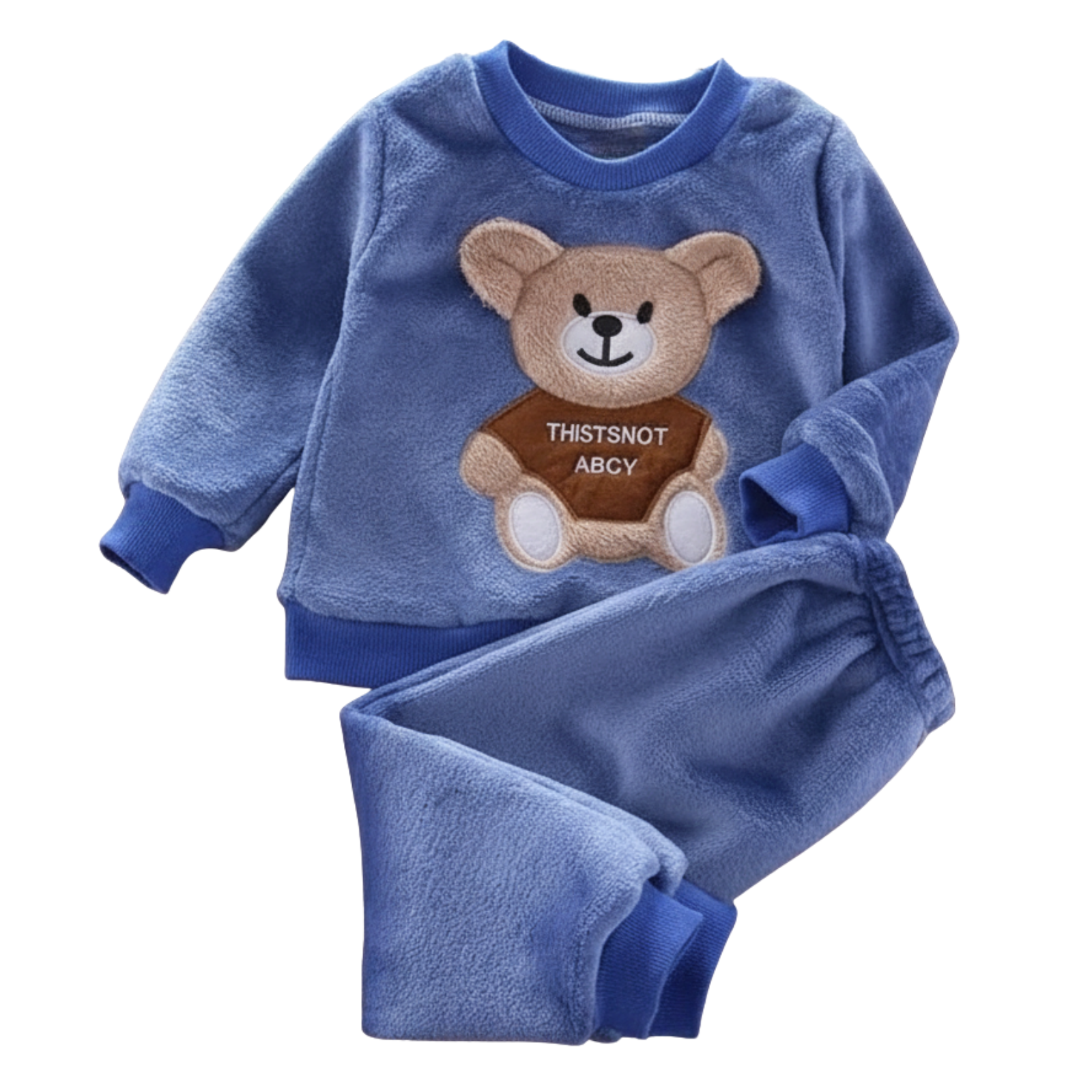
The Teddy 2 Pieces Toddler Tops And Pants Set combines a pullover top with separate trousers. That gives you separate top and trouser steps to practise. Check the actual chosen size and garment rather than assuming the set will be easy for every child.
Let the child choose between two appropriate outfits when possible. It offers participation without requiring them to make a wardrobe decision from an overflowing drawer.
Practise taking clothes off as well
Getting dressed is only half the routine. Your child may need to remove a layer, change after an activity or get ready for the bathroom. Practise those steps with the same patience as putting clothes on.
Keep a place for clothing removed during practice. A simple basket is enough. The objective is to keep the outfit findable, not to teach a complicated folding system at the same time.
For example, if taking off the top is the hard part, an adult can help with that step while the child handles the trousers. Assistance can be specific rather than all-or-nothing.
Make tomorrow's outfit easy to find
Put a complete outfit at a reachable location appropriate for your child. Keep shoes together and have the required outer layer ready. This is separate from packing spare clothes: it is the outfit they will put on first.
Review the arrangement after the first preschool week. If the same sleeve or fastening repeatedly causes frustration, choose a simpler option or adjust the help you provide. There is no benefit in keeping a “practice outfit” that makes every morning harder.
The useful result is a small, repeatable routine your family can sustain. Clothes should support the day ahead, while practice gives your child opportunities to participate at their own pace.
For the related basics, read our guide to the Teddy two-piece outfit.